
Energy Policy
After 16 years of darkness, REA powers Kano community with mini-grid projects



Published
3 hours agoon
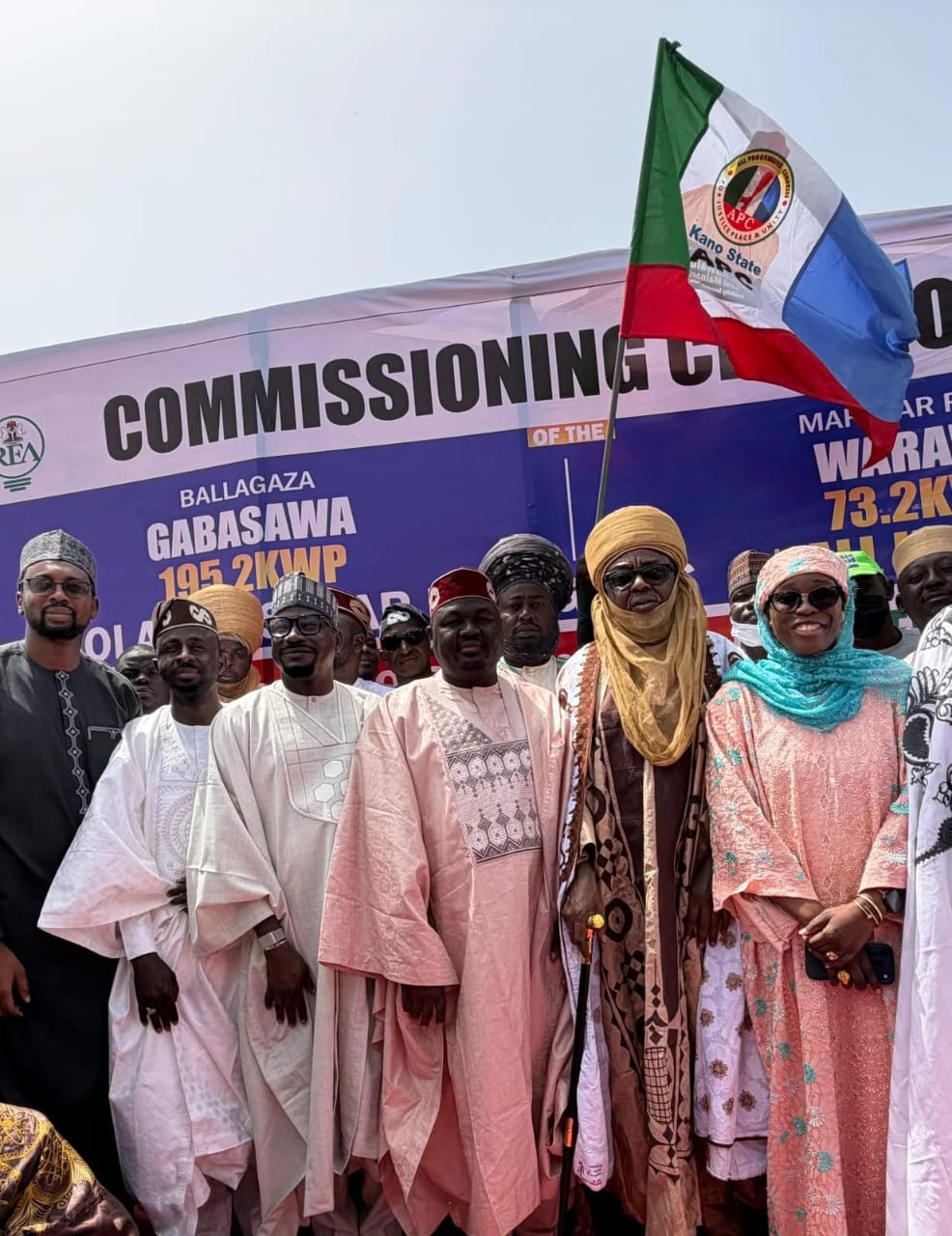
The Rural Electrification Agency (REA) has again advanced its goal of deepening electricity access across the country with the commissioning of two mini-grid projects in Kano State after over sixteen years of darkness.
The agency commissioned two projects comprising a 195kWp system in Ballagaza and a 70kWp system in Marayar Rogo, located in Warawa, which will serve 2,222 households ending over sixteen years of darkness.
Speaking at the ceremony, the Managing Director of the Rural Electrification Agency (REA), Abba Aliyu, described the project as another step toward achieving the Renewed Hope Agenda’s goal of electrifying over 17 million Nigerians.
The REA MD described the project as a strong example of what public-private partnerships can achieve.
He also thanked the Kano State Governor, Abba Kabir Yusuf for identifying electricity as a key deliverable of his administration and for providing a conducive environment for the execution of the project.
“The Federal Government did not build these mini-grids and hand them over. Alfuttaim Nigeria Limited invested its own money, built them, and will own and operate them for many years. What the government did, through the DARES programme delivered by the REA with support from the World Bank, was to subsidize part of the cost to ensure the electricity is affordable for you.”
“Under DARES, Nigeria is working toward 1,350 mini-grids, and the programme has already brought new or improved electricity to more than five million Nigerians. Our country still has more people without electricity than any other nation in the world. That challenge will not be solved by a single agency or programme; it will be solved community by community, in places like Ballagaza and Marayar Rogo, when private companies are willing to invest and communities take ownership of what is built for them. The government’s job is to keep its word to both,” he said.
The Gabazawa community which is known for groundnuts, millet, sorghum, and soya, as well as its blacksmiths, weavers, and dyers, will experience advanced production, allowing groundnuts to be pressed into oil and kuli-kuli using electric machines and sold at a better price.
The mini-grid project will also serve the primary healthcare centre in the Gabazawa community, which has previously been without power.
In her remarks at the event, the Co-founder of Alfuttaim, Dr. Nabilah Sani, expressed delight at the completion of the project, noting that it will not only power homes but also boost agricultural productivity.
She thanked the Federal Government for facilitating the funding that brought the project to fruition while noting that these are just two of ten sites currently under development in Kano.
She further urged residents of the community to protect the infrastructure as their own and shun vandalism.