
Renewable Energy
REA, Zamfara Collaborates On Renewable Energy Penetration As Agency Flags off 37 mini-grid projects



Published
12 hours agoon

A new electricity policy has been unveiled by the zamfara state government in latest moves by the sub-national government in Nigeria’s northwestern state to drive it’s electricity market.
The state government in push to expand it’s renewable energy infrastructure and strengthen energy security within it’s domain has also entered into what it says is a landmark collaborative agreement with rural electrification agency, REA.for solarisation of public institutions across the state.
According to the government, the planned electrification programme comprises 2 interconnected mini-grids and 35 isolated mini-grids, representing approximately 18.8 megawatts-peak(MWp) of solar generation capacity and 125,106 planned electricity connections across Gummi, Gusau, Kaura Namoda, Maradun, Shinkafi, Tsafe and Zurmi local government areas.
With the birthing of the zamfara state electricity policy, steps are now underway to establishing a structured, commercially viable and investment-friendly electricity market expected to compliment the collaboration agreement with REA both targeting to improve electricity reliability, reduce dependence on expensive fossi-fuel-based generation in the state.
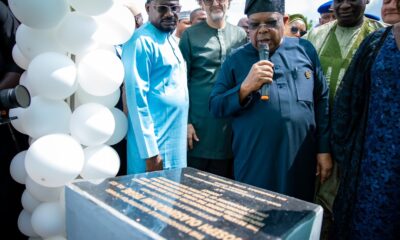
Nigeria’s minister of Power, Joseph Tegbe who was on ground to commission two solar mini-grids projects developed by the zamfara state government as part of the activities to mark the new energy policy direction of the state government also unveiled 100 ZamTaxi electricity vehicles, marking an expansion of clean transportation initiatives in the state. Ten electric tricycles dedicated to maternal health services were also unveiled to support improved access to healthcare transportation across the various sections of the state.
Governor Dauda Lawal while speaking on his administration’s energy policy said the unveiling of the zamfara state electricity market and the collaboration with REA are important steps taken by his administration to strengthen economic development.
“Today, we are taking deliberate steps to redefine Zamfara’s electricity future. The unveiling of our State Electricity Policy is a statement of our intention to build a structured, investment-friendly and sustainable electricity market that responds to the needs of our people and the ambitions of our economy.”
“We recognise that reliable electricity is indispensable to agricultural transformation, industrial development, healthcare delivery, education and job creation.”
“Our collaboration with the Rural Electrification Agency on the solarisation of public institutions reflects our determination to translate policy into practical infrastructure that improves the delivery of essential services.” Governor Dauda stated.
On his part, Minister of Power, Joseph Tegbe, described the event as a demonstration of the Federal Government’s commitment to expanding electricity access and supporting state participation in electricity market development.
“Under the Renewed Hope Agenda of President Bola Ahmed Tinubu, GCFR, the Federal Government is pursuing an electricity transformation strategy that recognises the critical role of decentralised infrastructure, state-level market development and private-sector investment.”
“The unveiling of the Zamfara State Electricity Policy, the groundbreaking of new mini-grid infrastructure and the commissioning of renewable energy projects demonstrate how policy reforms can be translated into practical development outcomes.”
“Electricity must do more than illuminate homes. It must power hospitals, strengthen educational institutions, support agricultural productivity, enable businesses and improve the quality of public services.”
“The Federal Government will continue to support states that are taking practical steps to develop their electricity markets and create the conditions necessary for sustainable private investment.” Tegbe declared.
In his remarks, the Managing Director/Chief Executive Officer of the Rural Electrification Agency, Dr. Abba Aliyu, described the Zamfara intervention as a direct opportunity to demonstrate a new model of electricity development in Nigeria, combining infrastructure investment, state-level policy reform, institutional electrification and private-sector participation.
“Today, Zamfara is doing something fundamentally important. We are moving beyond the traditional approach of treating electricity access as a series of isolated infrastructure projects towards building an integrated electricity economy supported by policy, investment, institutions and sustainable market structures.”
“Through the REA, we are advancing 37 mini-grid projects comprising two interconnected and 35 isolated systems, with approximately 18.8MWp of solar generation capacity and 125,106 planned electricity connections across seven Local Government Areas.”
“At an illustrative average of five people per household-equivalent connection, this represents a potential reach of more than 625,000 people, subject to the actual mix of household, commercial and institutional connections.”
“The collaboration agreement we have signed with the Zamfara State Government for the solarisation of public institutions is equally strategic. Across Nigeria, public institutions continue to face the financial and operational consequences of unreliable electricity. Hospitals, schools and government facilities often depend on expensive alternative generation, diverting scarce resources away from essential services.”
“Under the $750 million World Bank-supported Distributed Access through Renewable Energy Scale-up (DARES) programme, our national ambition is to expand electricity access to approximately 17.5 million Nigerians, while supporting the development of around 1,350 mini-grids and scaling distributed renewable energy solutions.” The REA further emphasised.
At a time Nigeria still faces challenges of reliable electricity, the Zamfara intervention highlights the opportunities available to Nigerian states as the electricity sector undergoes structural transformation.
By combining an electricity policy framework, a pipeline of decentralised generation projects, institutional solarisation and clean mobility initiatives, Zamfara is pursuing an integrated approach to energy development.
The REA says it will continue to support the state through technical collaboration, project development and private-sector engagement, with particular emphasis on the commercial sustainability of electricity infrastructure and its contribution to economic productivity.
The collaboration agreement on public institution solarisation also provides an opportunity to explore scalable financing and implementation models that could be replicated across other states.
As Nigeria advances its electricity access and energy transition objectives, the Zamfara initiative demonstrates how coordinated federal and state action can help translate sector reforms into practical infrastructure and measurable economic benefits.


REA, Zamfara Collaborate on Renewable Energy Expansion as Agency Flags Off 37 Mini-Grid Projects


Why the proposed electricity act amendment risks setting back Nigeria’s renewable energy revolution

FG deepens renewable energy penetration, commissions 581Kawp/1.4MW solar mini-grid in Kwara


REA commits to transparency and accountability, receives ICPC visiting team


FG Unveils RAMCO, Vows to End Cycle of Neglected Power Infrastructure


RAMCO is Nigeria’s solution to end power failure in health facilities — Minister