Energy Policy
Nigeria moves to unlock 3,969MW electricity as country wins in Mambilla power project legal dispute


Published
18 hours agoon
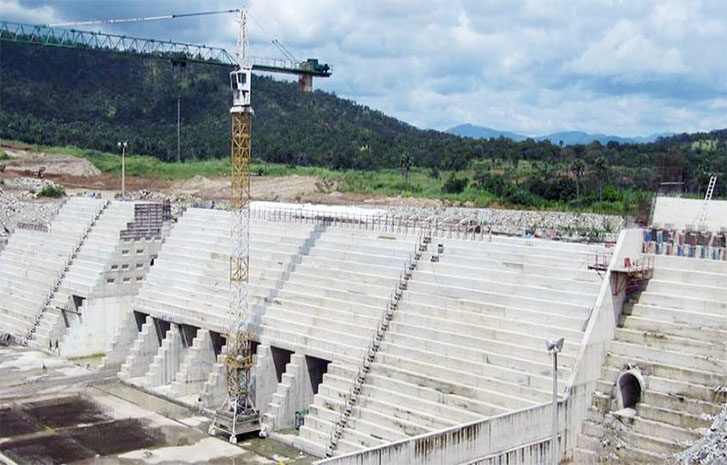
Mambilla power project officially conceived and awarded by the Shagari administration in 1982 was projected to unlock and deliver up to 3,960MW of electricity, the largest hydro project in Nigeria.
The project as originally designed was expected to drive Nigeria’s national installed capacity by over 50%, provide stable 24-hour power for industrialisation, and reduce the country’s reliance on gas powered turbines which has now become a major constrain for the power sector in Nigeria due to access challenges of this essential material needed to power turbines for electricity generation in recent years. The development and the push for Nigeria’s journey towards reliable electricity through the Mambilla power project have been stalled due to a $2.35 billion litigation brought against the Nigerian government by sunrise power who had accused the government of breaching it’s contractual obligations under the settlement agreement and the addendum, a litigation that has lasted nine years before the ruling of September, 17th, 2026.
In it’s final ruling on thursday, September 17,2026, a 3-member tribunal led by Melaine van Leeuwen with Stavos Brekoulakis and Simon Nesbitt dismissed sunrise’s $3.38bn claim for alleged breach of a 2003 build-operate-transfer,(BOT) contract against the Nigerian government. The court also dismissed a $400 million demand arising from a 2020 settlement agreement signed by then former AGF Abubakar Malami among other rulings in favour of Nigeria.
The ruling in France has been applauded back home in Nigeria. President bola tinubu in his reaction acknowledged the efforts of previous administration before him in getting justice, the president said Nigeria remains committed to partnering genuine investors, but declared that Nigeria will continue to defend all opportunistic claims instituted against the commonwealth of the country. “Today’s ICC ruling clears the single biggest legal hundle that has paralysed the Mambilla hydro power project for years” President Tinubu declared on Thursday.
With the legal tussle out, many are already asking what next? In specific terms, questions are already been asked on what Nigeria stands to gain from this latest ruling on one Nigeria’s most ambitious power sector project. One of the significant benefits with this ruling is that Nigeria can now negotiate financing afresh without risk of asset seizure or garnishee, this is because, before now, and for over 20 years, China exim bank which was to provide 85% of the $5.8bn project cost refused to release funds in the face of litigations. The court ruling also protects the nation federation account and external reserves. If the ruling had gone otherwise, Nigeria would have been mandated to pay the sum of $3.38bn liability.
The ruling has also placed the country on the right trajectory of unlocking 3,960MW of baseload power, a development that can potentially drive Nigeria’s installed capacity by over 50%, and provide stable power supply. Other benefits include the project’s potential to to create over 50,000 direct and indirect Jobs now that construction should ordinarily be underway including the window of opening irrigation for taraba state and electrification for the north-east.
With the ruling directing sunrise to refund Nigeria 75% of it’s legal cost running to $11.82million total means Nigeria ran a legal tussle at almost no cost on its pause.
It is the view of many that for a power project that was first surveyed in 1972 but originally awarded in 1982, the time for the country to explore the latest opportunity provided by this ruling to fast track the completion of this national asset and birth a new direction for the nation’s hydro-electricity capability starts now, if the much desired need to improve on Nigeria’s electricity supply is to be achieved.