
Energy Policy
President Tinubu hails REA off-grid projects to underserved communities in democracy day speech


Published
3 months agoon
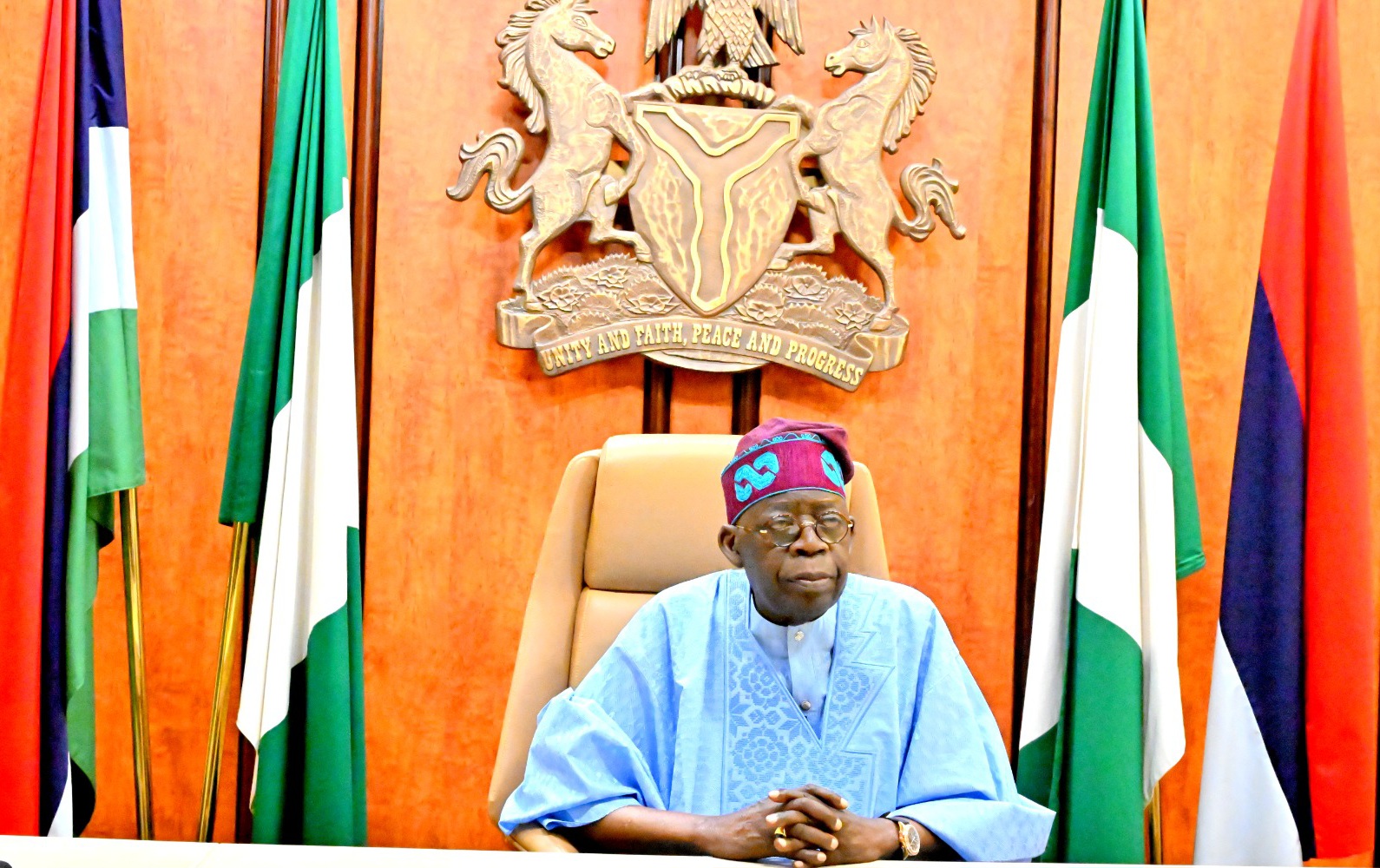
In commemoration of Democracy Day, President Bola Ahmed Tinubu has hailed the Rural Electrification Agency (REA) for its aggressive drive in deploying off-grid and mini-grid power solutions to power the nation’s underserved communities, universities, markets, and hospitals.
The President in his democracy day broadcast reiterated his administration’s stance that reliable electricity is a democratic dividend owed to every Nigerian.
The President further highlighted the strides being made to permanently address the structural problems besetting the nation’s power sector under his leadership.
“To address the problems besetting the sector, I signed the Electricity Act, which grants states authority to generate, transmit, and distribute power.”
“The Presidential Power Sector Task Force is working hard to reduce the metering deficit and has been authorised to raise a ₦4 trillion bond to settle verified legacy debts. Alongside these reforms, the REA, supported by the World Bank and the African Development Bank is successfully ensuring that underserved communities participate fully in the nation’s growth story,” President Tinubu stated.
Recall that last week the agency commissioned the largest solar hybrid mini-grid projects in North-central.
Delivered under the REA-DARES Performance-Based Grant (PBG) Programme funded by the World Bank and implemented by PriVida, the newly commissioned projects include major installations in Emewe Efopa, Dekina LGA (442kW) and Offa, Olamaboro LGA (704kW).
This joins the growing portfolio of projects executed by the agency in the North-central. So far 11 mini-grid sites have been completed across Kogi State under the DARES PBG Programme, culminating in a combined 2.5MW of clean, decentralized energy infrastructure.
The newly commissioned grids are expected to provide clean, reliable electricity to more than 5,000 households, while powering local businesses, schools, and healthcare facilities.
As at today, over 1000 mini grids are being developed across the country. Additionally, 48 Interconnected mini-grids are being deployed that will inject additional 288MW of clean reliable capacity are being deployed in collaboration with 11 Distribution Companies.
At the heart of this regional expansion is the World Bank-supported Distributed Access through Renewable Energy Scale-up (DARES) initiative. The project’s targets are aggressively mapped toward radical socio-economic transformation across the country: providing clean, reliable electricity to over 17.5 million Nigerians, directly powering more than 2.5 million households, and launching 1,350 localized mini-grids including 250 highly efficient interconnected systems to permanently bridge the nation’s energy divide.
Beyond the DARES framework, the REA is leveraging diverse international alliances to target specialized industrial and urban economic hubs. Working under the Interconnected Mini-Grid Acceleration Scheme (IMAS) in partnership with the European Union, the agency has deployed 11 interconnected mini-grids with a 504kW project in Epe, Lagos State ready for commissioning by the Minister of Power, Joseph Tegbe. This installation serves as the initial phase of a broader 5MW regional plan set to be officially commissioned by . Concurrently, a dedicated Korean energy project is introducing advanced storage and smart-grid configurations to sub-urban grids, bolstering grid stability and technical knowledge transfer with deployments of 900kW and100kW in Rubochi and Ikwa, FCT, Abuja respectively.
For remote communities entirely cut off from conventional transmission corridors, the REA relies on its core Rural Electrification Fund (REF).The REF is currently advancing over 50 last-mile mini-grids, actively driving down the cost of rural business operations and establishing basic baseline power where no utility infrastructure previously existed.
Similarly, the administration is pairing physical deployment with structural optimization and targeted industrial use-cases. The National Public Polarization Project aims to deliberately de-risk and homogenize component procurement across the country, driving down the localized cost of rural electrification components while increasing overall system reliability.
In industrial and strategic centers, large-scale customized engineering is already visible through a 1MW facility engineered by KELEMM engineering in Abuja with over 40MW capacity awaiting deployment.
Recognizing that power must drive productivity, a collaborative program with the United Nations Development Programme (UNDP) under the Africa Mini-grid Programme has established 23 specialized mini-grids with a recent commissioning of a solar mini-grid project in Daddara community, Katsina state. These installations are engineered specifically to power post-harvest processing, milling, and cold-storage infrastructure, thereby directly anchoring local agricultural supply chains.
Nigeria is also rapidly positioning itself as West Africa’s primary renewable energy manufacturing hub, backed by an impressive 3.7 gigawatts (GW) of capacity currently in its development pipeline. This transition has already evolved past mere domestic deployment; locally manufactured solar panels are rolling off assembly lines in industrial corridors like Lagos and are being actively exported to regional neighbors, including Accra, Ghana.
With the combination of policy reforms, a ₦4 trillion debt-settlement strategy and rapid rural electrification, the Federal Government is firmly on track to deliver its democratic promise of electricity to all Nigerians.

FG Unveils RAMCO, Vows to End Cycle of Neglected Power Infrastructure

RAMCO is Nigeria’s solution to end power failure in health facilities — Minister


FG launches RAMCO targets up to 6,500MW generation by year-end
Renewable energy investments may be lost without proper management — Alausa


From megawatts to prosperity: Rural electrification in the age of AI
RAMCO is Nigeria’s answer to long-term renewable energy investment — Aliyu