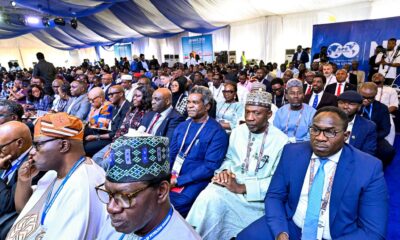
THE Nigerian Midstream and Downstream Petroleum Regulatory Authority (NMDPRA) has officially launched the Revision 2 of the Nigerian Gas Transportation Network Code, (NGTNC) to strengthen gas transportation regulations, improve market efficiency and also to fast track trade.
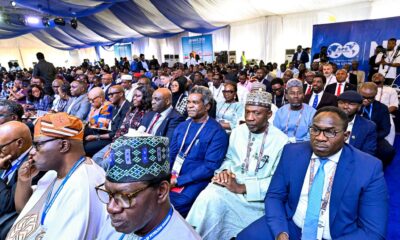
The Authority Chief Executive, Mr Rabiu Umar launched the code at the 20th edition of OTL Africa Downstream Energy Week 2026 which officially opened in Lagos on Monday, 26th, October.
While giving clarity to the code unveiling, Umar said the revised code provided clearer rules for gas measurement, nominations and transportation, a development he said will help promote transparency and improve coordination among network users.
The authority chief executive said that participation in the gas transportation network had increased, with more shippers joining since the introduction of Revision 1.
He further noted that imbalances on the western gas network had declined by 30 per cent since the earlier version was introduced.
Umar also noted that effective gas transportation regulations were essential to improving network operations and supporting the growth of Nigeria’s gas market.
NGTNC according to the NMDPRA a set of rules that govern the activities of participants in open access gas transportation.
NGTNC revision II the NMDPRA further stated incorporated 28 amendments including 4 critical changes on Daily Reserved Pipeline Capacity Variation, *Communication Protocol*, *Measurement Loss Factor*, & *Balancing Neutrality Charges*
These crucial additions the NMDPRA also noted provide more flexibility to commercial agreements, promote coordinated efforts amongst stakeholders in the wake of Network disruption, standardise measurement for tighter revenue accruals, and support transparent transactions in system trade.
The announcement came as Umar highlighted the transformation of Nigeria’s domestic fuel supply following the expansion of local refining capacity. He said domestic refineries supplied about 74 per cent of petrol consumed in Nigeria in September, compared with approximately 44 per cent in September, 2025, while petrol imports fell in September by 54 per cent, from 22.1million litres per day to 10.2million litres per day.
According to him, the growing contribution of domestic refineries helped Nigeria maintain fuel supplies amid international market disruptions and rising crude oil prices.
Umar said all petrol supplied in Nigeria met the 50-parts-per-million sulphur standard, while the authority was upgrading its laboratories to international standards.
He added that monthly market data would continue to be published to improve transparency and provide reliable information for industry participants.
The NMDPRA chief also called for greater cooperation among African countries to reduce dependence on imported refined petroleum products.
He observed that Africa produces approximately five million barrels of crude oil daily but imports about 70 per cent of its refined fuel requirements, despite its substantial hydrocarbon resources.
He advocated increased domestic refining, shared regional infrastructure, harmonised regulatory standards, greater mobilisation of African capital and coordinated strategic petroleum stocks.
Umar, who is also chairman of the West Africa Regulators’ Forum, proposed a phased approach to regulatory convergence, beginning with alignment of fuel standards and market data in 2026 and 2027, followed by mutual recognition of licences and common cross-border infrastructure codes in 2028 and 2029.
By 2030, he said, the region should work towards coordinated strategic reserves, cleaner fuel standards and a credible West African reference price.