
Oil and Gas Industry
Republic of the Congo studys Nigeria’s local content template for country’s oil and gas sector development


Published
24 minutes agoon
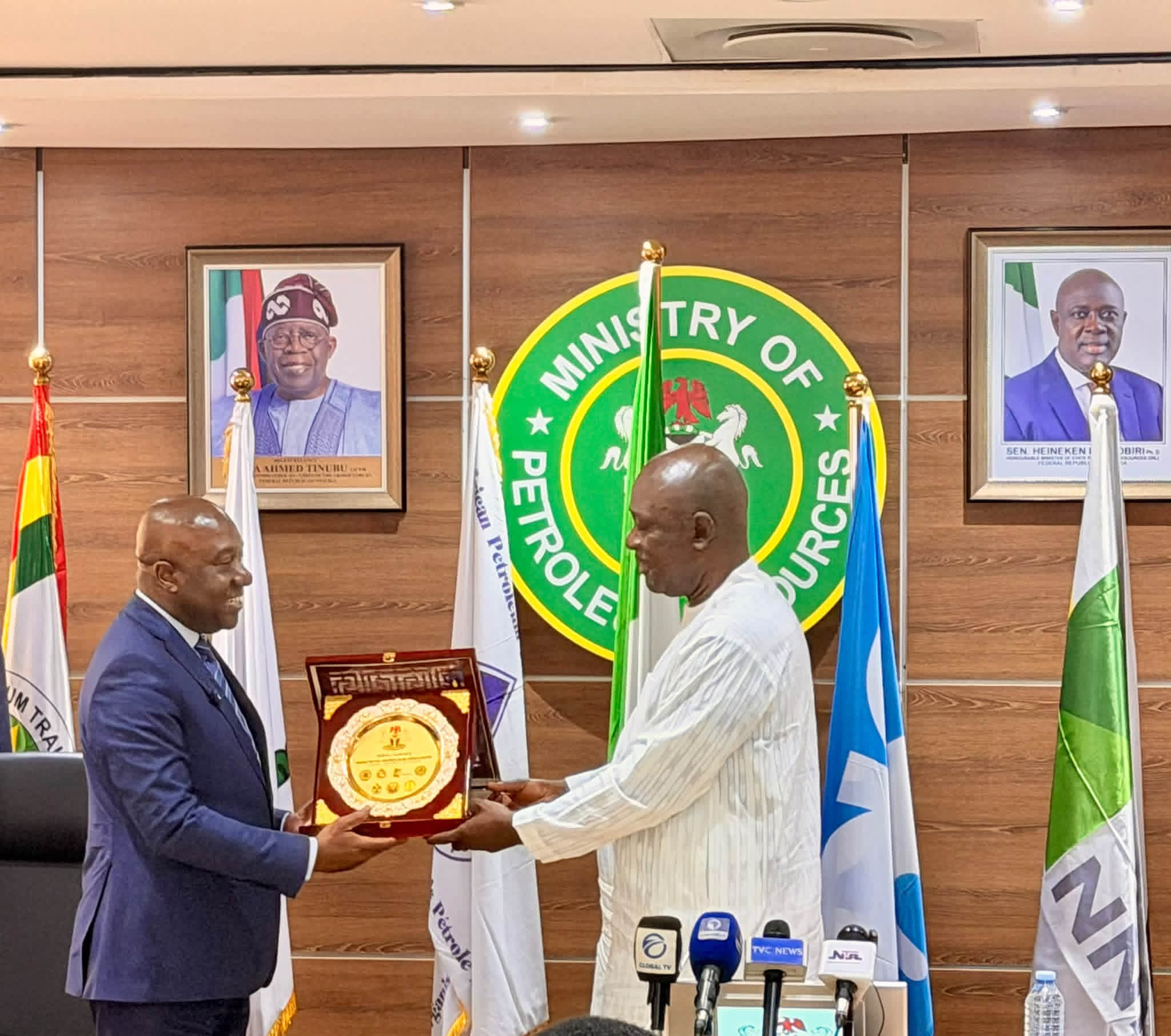
The Minister of Hydrocarbons of the Republic of Congo, H.E. Stève Simplice Onanga, has led a high-powered delegation from the Ministry of Hydrocarbons and other senior government officials to Abuja, Nigeria, on a study visit focused on Nigeria’s Local Content policy and its implementation.
The delegation paid a courtesy visit to the Honourable Minister of State for Petroleum Resources (Oil), Senator Heineken Lokpobiri, at his office in Abuja, as part of efforts to strengthen cooperation between Nigeria and the Republic of Congo in the oil and gas sector.
The visit is aimed at enabling the Congolese delegation to understudy Nigeria’s experience in developing and implementing its Local Content framework, with particular emphasis on how the policy has facilitated the growth of indigenous companies, enhanced local participation in the petroleum industry, created employment opportunities and retained greater value within the Nigerian economy.
Nigeria’s Local Content journey has increasingly positioned indigenous companies to participate more actively across the oil and gas value chain. The Nigerian Content Development and Monitoring Board (NCDMB) has also continued to promote capacity development, financing, technology acquisition and industrial growth within the sector.
Speaking during the visit, H.E. Stève Simplice Onanga expressed appreciation for the opportunity to learn from Nigeria’s experience.
He said the delegation was in Nigeria because of the progress the country has made over the years in implementing its Local Content policy. “It is a great pleasure for us to be here. Our visit is based on the experience you have had over the years, and we are here to understudy your Local Content policy.”
According to him, the primary objective of the visit is to gain practical knowledge that can support the improvement of Local Content implementation in the Republic of Congo.
He noted that Congo is particularly interested in developing a Local Content framework that will ensure that the country’s oil and gas resources translate into greater opportunities and benefits for Congolese citizens
“The objective is mainly on Local Content and improving our own Local Content policies in the Republic of Congo. We really wish to develop our Local Content for the benefit of the Congolese people.”
Responding, Senator Heineken Lokpobiri welcomed the Congolese delegation and reaffirmed Nigeria’s commitment to strengthening bilateral cooperation with the Republic of Congo, particularly in the area of Local Content development.
The Minister said Nigeria was willing to share its experience and lessons from the implementation of its Local Content policy with its “brother country,” Congo.
He explained that Nigeria’s Local Content journey began more than 15 years ago with the development of the legal framework that established a structured approach to increasing indigenous participation in the oil and gas industry.
According to him, the policy has contributed to the emergence and expansion of Nigerian companies capable of providing services previously dominated by foreign companies.
He noted that Nigerian indigenous companies now play significant roles across the industry and have developed the capacity to work alongside international oil companies and other global service providers.
Lokpobiri further highlighted the role of Local Content in strengthening indigenous businesses and retaining value within the Nigerian economy.
He said: “It is my belief that the solution to solving Africa’s energy problems lies more on Africa.”
The Minister expressed confidence that Congo can develop its own Local Content capacity by adapting relevant lessons from Nigeria’s experience to its own national circumstances. “If Nigeria can do it, I believe Congo can do it as well.”
Senator Lokpobiri also highlighted the growth of indigenous participation in Nigeria’s petroleum industry, noting that Nigerian companies have increasingly taken on major roles in the sector.
He explained that while foreign service companies once dominated significant areas of the Nigerian oil and gas industry, the development of Local Content has helped create a new generation of indigenous companies capable of providing specialised services and competing within the industry.
He said these Nigerian companies now coexist and work alongside international companies, providing services across different segments of the petroleum value chain.
The Minister also noted that the divestment of some international oil companies has created opportunities for Nigerian companies to acquire assets and infrastructure and expand their participation in the sector.
Senator Lokpobiri further explained the financing structure supporting the Nigerian Content Development and Monitoring Board.
He stated that NCDMB’s operations are financed through a statutory one-percent contribution from contracts in the Nigerian oil and gas industry, rather than being dependent on direct annual government funding.
The model, he explained, provides a sustainable funding mechanism for the Board to carry out its mandate of developing indigenous capacity and promoting Local Content in the petroleum industry.

Republic of the Congo studies Nigeria’s local content template for the country’s oil and gas sector development

NCDMB to Feature Nwabuikwu’s The Pain and The Promise In Book Reading Session

AOW 2026: NCDMB takes Nigeria’s local content message to Accra, shares country’s experience

NOGC2026: NCDMB advocates pan-african collaboration to drive growth across oil and gas value chain

NLNG, NCDMB strenghtens research and Innovation capacity at rivers state university to enhance energy sector growth

NCDMB, Zigma Ltd train 50 Nigerian youths in crane operation to boost indigenous technical capacity in oil and gas sector