
Oil and Gas Industry
OGTAN CONFAB: Experts push for improved capacity to bridge skill gaps in oil and gas sector


Published
2 months agoon
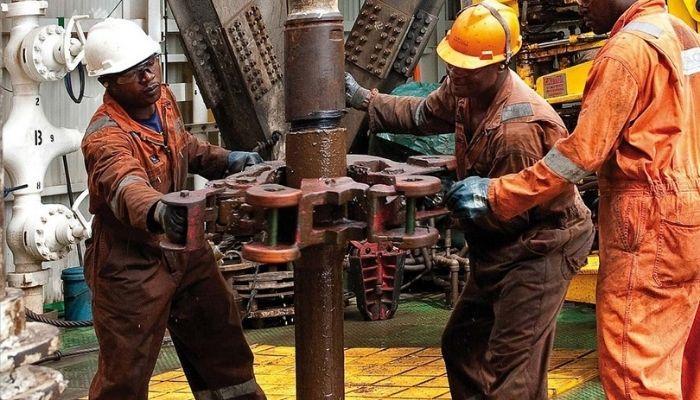
Industry leaders, regulators and academia have raised concerns over the current state of workforce in Nigeria’s oil and gas sector including the training systems meant to prepare the sector as a competitive brand. The latest concerns flow from appraisals revealing that the present state of workforce in the sector lack the requisite capacity to prepare it for a fresh wave of major deepwater and offshore project investment now arriving in the Country, a development industry stakeholders say may not be unconnected to decades of slowed investments that have drove down Nigeria’s oil and gas talent pipeline.
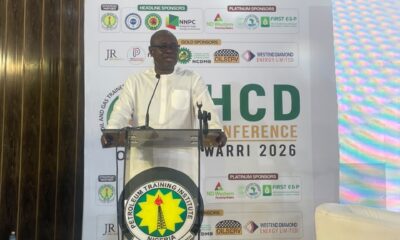
These concerns formed part of speakers review during a panel session “Setting the Agenda” – Local Content & Human Capital under PIA 2021 & NOGICD, held as part of the OGTAN HCD Conference and Expo, on Day 2 in Warri, Delta State.
Speakers warned that the sector remains at risk if structural gaps that continue to impede growth are not quickly bridged. They also warned that if the status quo where certificates are awarded without corresponding competence, classroom instruction without practical exposure persist, the sector faces even greater risks.
Engr. Felix Ogbe, Executive Secretary of the Nigerian Content Development and Monitoring Board (NCDMB), in his keynote address on the topic: The State of HCD in Nigeria’s Oil & Gas Industry, at the panel session, acknowledged that the industry had gone through a difficult period in recent times, with a long wait for new Final Investment Decisions (FIDs).
He emphasised that to correct this the Board has been building capabilities over the years.
The NCDMB’s boss who was represented on the panel by Engr. Abayomi Bamidele, Director, Capacity Building Directorate explained that without new projects, the chances for local content to grow becomes slimmer.
Speaking further, Engr. Ogbe noted that in roughly 15 years of lost investment, a generation of Nigerian graduates missed opportunities to acquire new technical skills to prepare them for the demands of the envisaged future of the oil and gas industry.
Engr. Ogbe noted that with renewed investment optimism inspired by the policies and executive orders of president Tinubu, a number of major projects are now on the horizon, and this makes workforce training an urgent priority.
Mr. Olanrewaju Kalejaiye, MD/ CEO, ND Western in his remarks on the state of HCD from an Operator’s Point of View, noted that HCD is typically viewed by many as simply a compliance requirement, with some seeing it purely from the point of training.
HCD according to him should be a critical determinant of the industry’s ability to safely produce hydrocarbons and deliver value for the country.
He said the NOGICD Act has driven increased local participation, resulting in more local engineering design work, a stronger supply chain, and a deeper talent pool.
“There is significant opportunity ahead” he noted, but cautioned that the industry is changing faster than the talent development system can keep pace with.
He argued that HCD must combine knowledge with real exposure; “it isn’t only about classroom training, but about field exposure, and operators should focus on exposing graduates to a variety of experiences early in their careers”
Dr. Afeez Oluwatoyin Ogun, DG of the ITF, on his part described the OGTAN HCD conference as a game-changing event arguing that competence should be defined by the ability to do the job, not by the possession of a certificate, and noted that skilled labour naturally gravitates toward where it is most rewarded and appreciated.
According to him, the nature of work itself has become more dynamic, and no longer tied to physical presence, with remote work now common, declaring that the industry must now recognize and adapt to this shifting reality.
He noted that many NCDMB-trained personnel are moving in droves in search of greener pastures with competent employees increasingly moving across borders, a development he says should raise serious concerns in the industry.
Professor Mike Onyekonwu, pioneer/founding Chairman of OGTAN and founder and Managing Consultant of Laser Engineering and Resources Consultants Limited while acknowledging the capacity of Nigerian graduates in his remarks said there should be no need to rely much on expatriates to drive growth for the sector, insisting that what the average Nigerian graduate needs is the requisite exposure to proper quality systems; “The education system has not adequately taught them this, including digital skills” he noted.
Onyekonwu called for improved industrial training (IT) programmes to expose petroleum scientists and engineers to effectively position them for the role of supervisors stressing that graduates undergoing industrial training are often left unsupervised — a gap he said must be closed if on-the-job training is to be properly managed.
He also called for a “train the trainers” initiative — arguing that as new skills continue to evolve, there needs to be a deliberate effort to go back into universities and retrain the trainers themselves.


OGTAN Confab: Delta state government declares readiness to deepen investment in skills development and technical education

OGTAN unveils 8-pillar manifesto, vows to move beyond “talk shop” conferences to measurable HCD outcomes


Decade of Gas cannot succeed without deliberate workforce development – Gas Minister at OGTAN HCD Confab


Global markets poach threatens Nigeria’s critical mid-career oil talent, despite rising investment – Ogunsanya, PETAN Chairman

OGTAN CONFAB: NUPRC boss raises fresh concerns over skills gap, as Nigeria eyes new oil investment cycle.

Oil And Gas: Lokpobiri restates Nigeria’s commitment to world-class workforce at OGTAN conference